

For Work
Filters
5 products
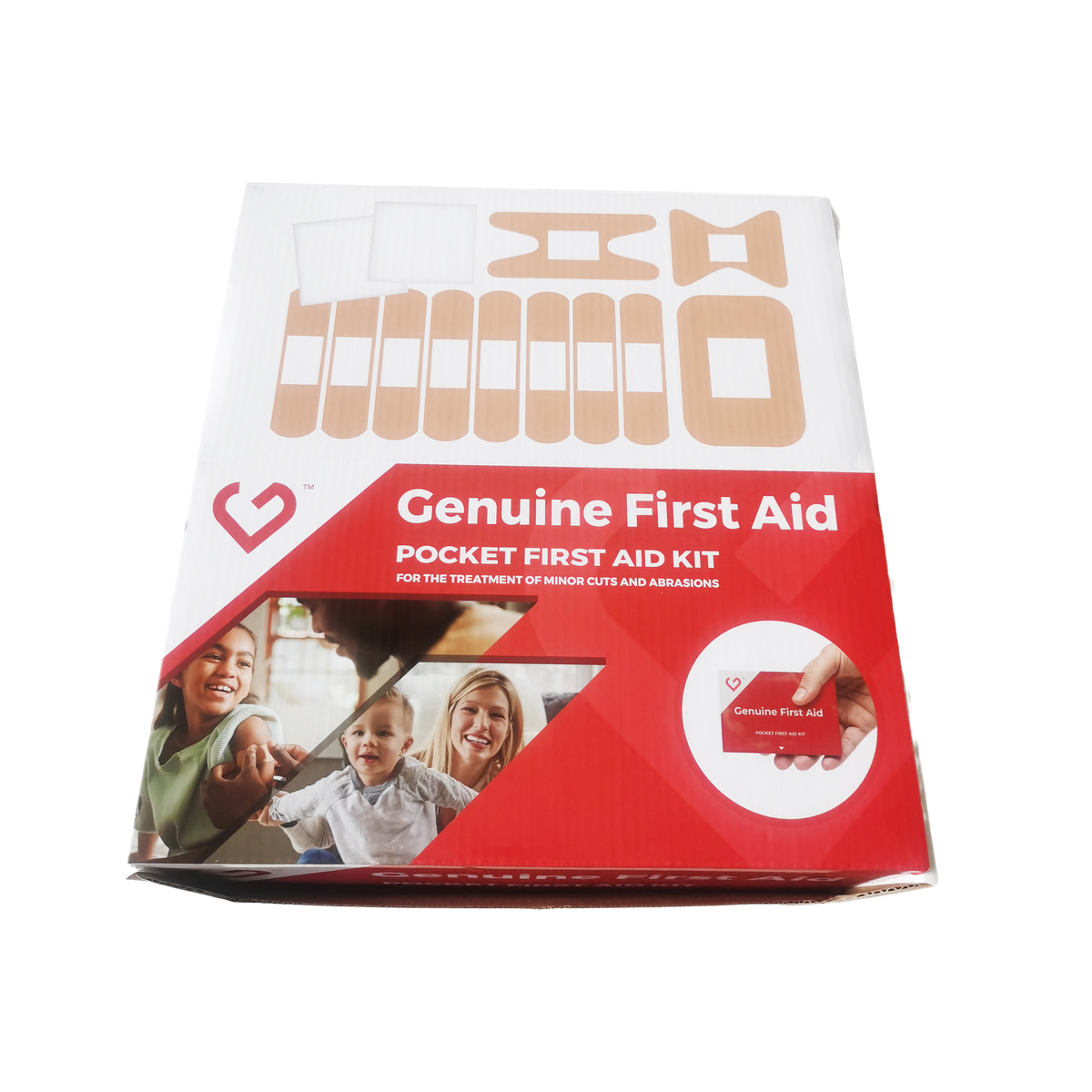
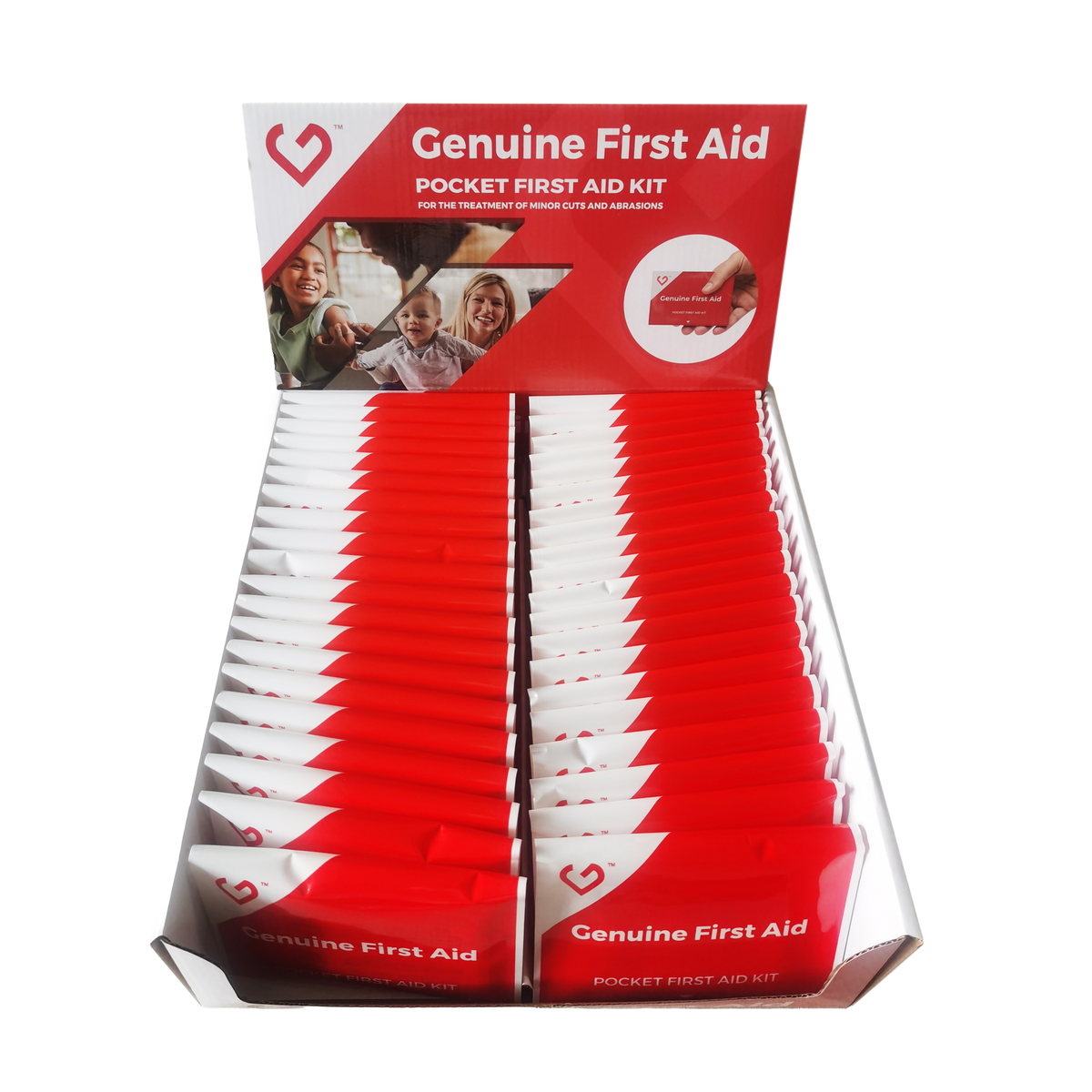
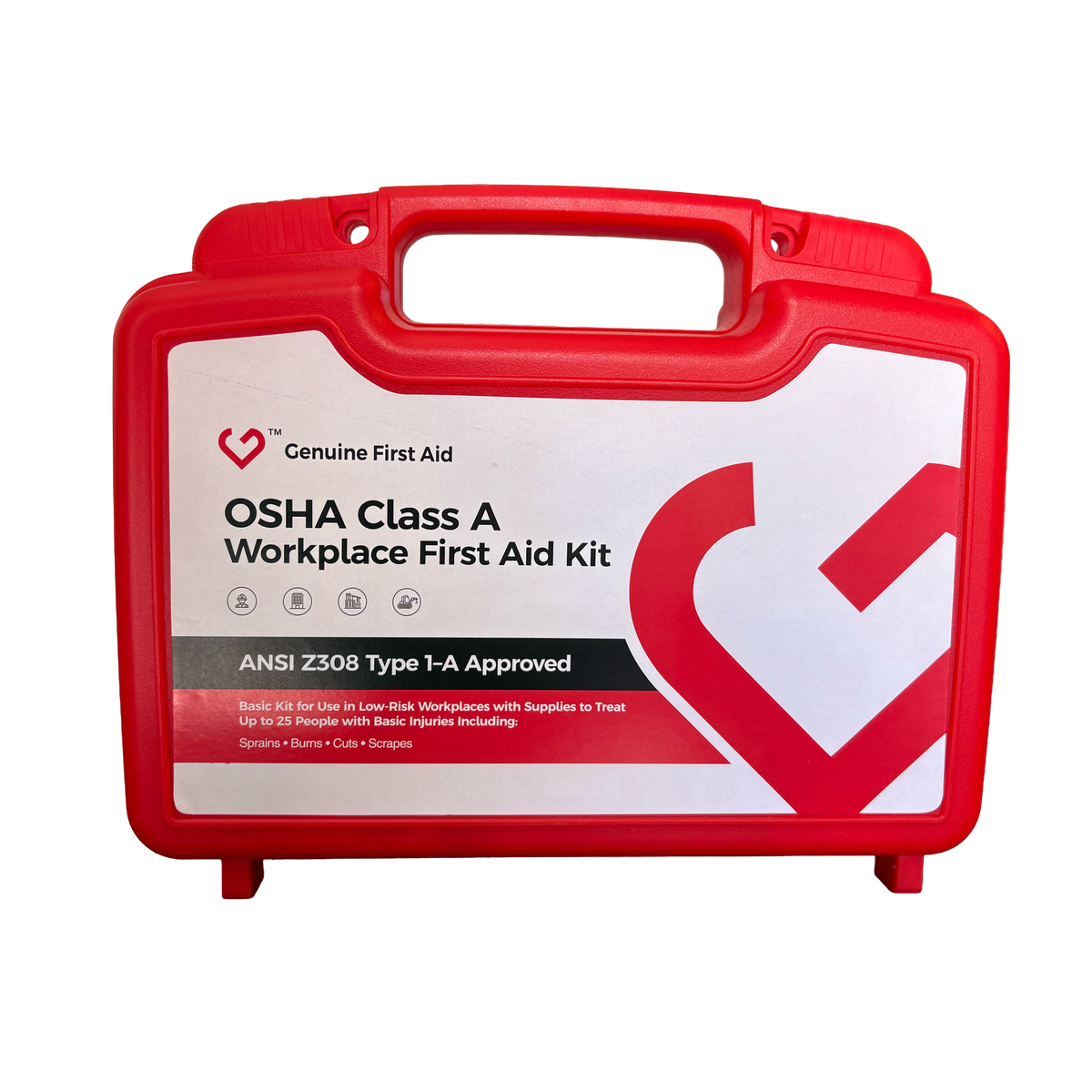
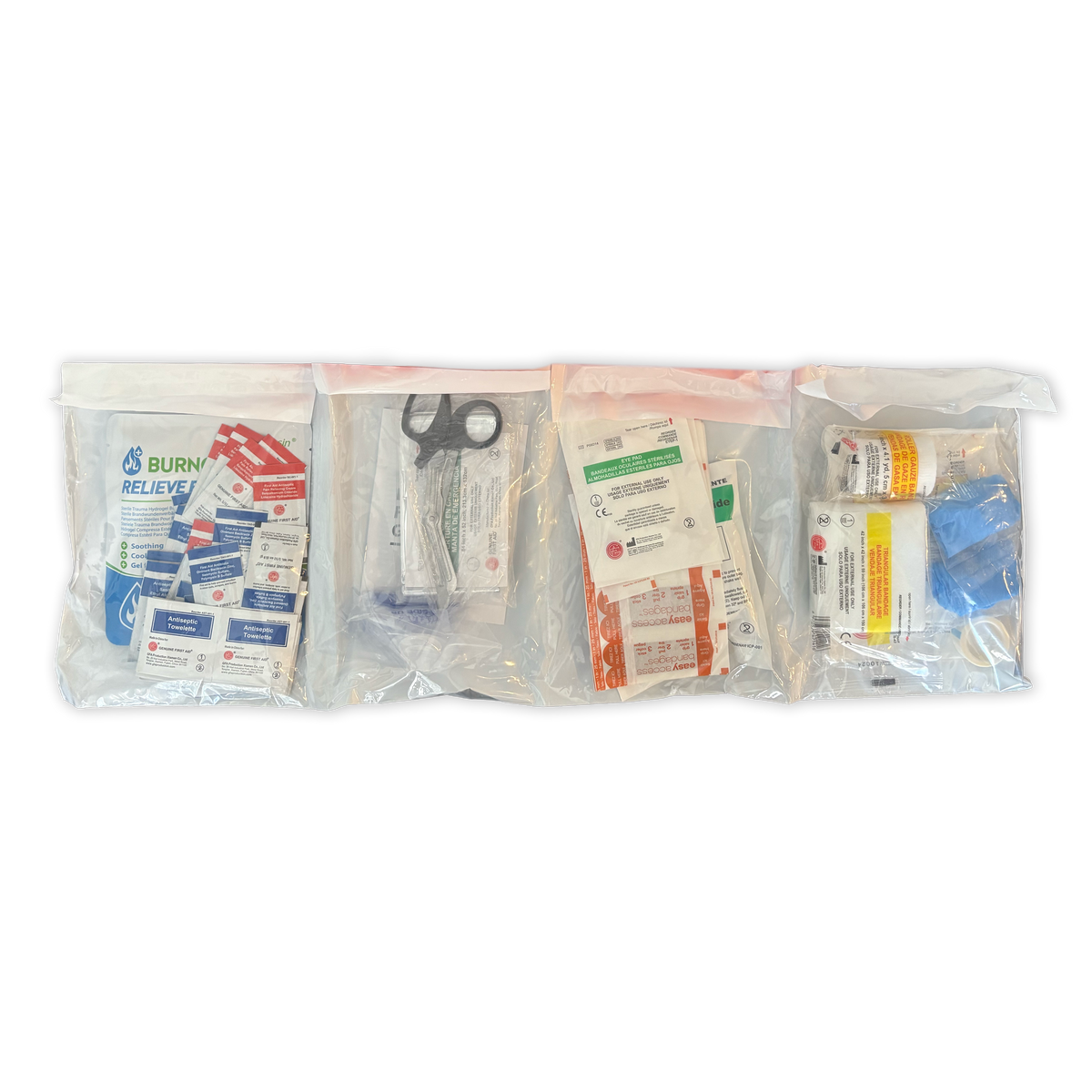
Workplace first aid
OSHA & ANSI/ISEA Z308.1 Class A first aid kits for offices, shops and jobsites
Federal OSHA requires employers to make adequate first aid supplies readily available (29 CFR 1910.151(b); 29 CFR 1926.50 on construction sites). OSHA does not publish a kit list and does not approve or certify kits: its non-mandatory Appendix A refers employers to the ANSI/ISEA Z308.1 standard, which defines Class A supplies (the most common workplace injuries) and Class B supplies (larger quantities for high-risk or populated sites), in Type I to IV containers (indoor mountable, portable indoor, mobile, outdoor/rough use).
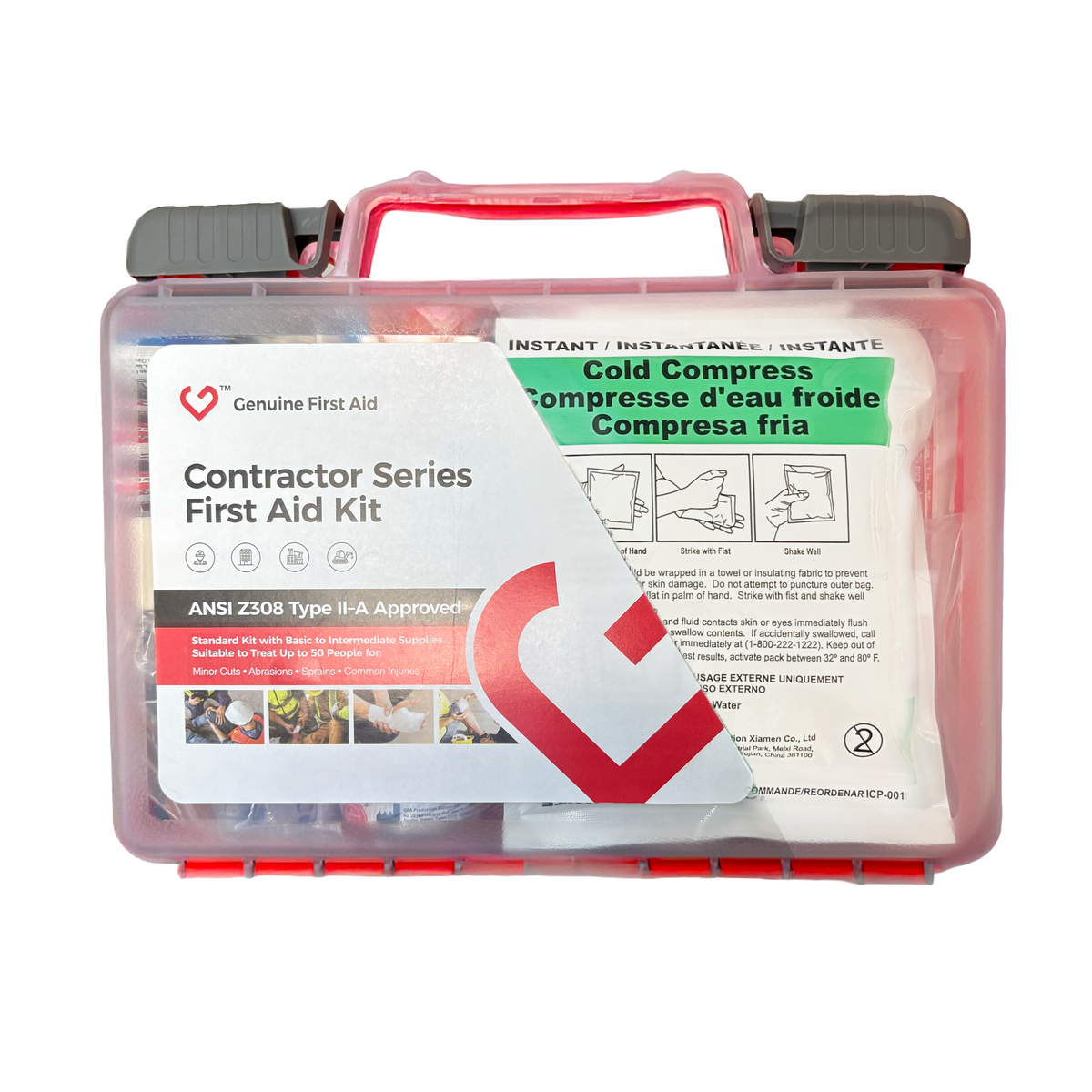
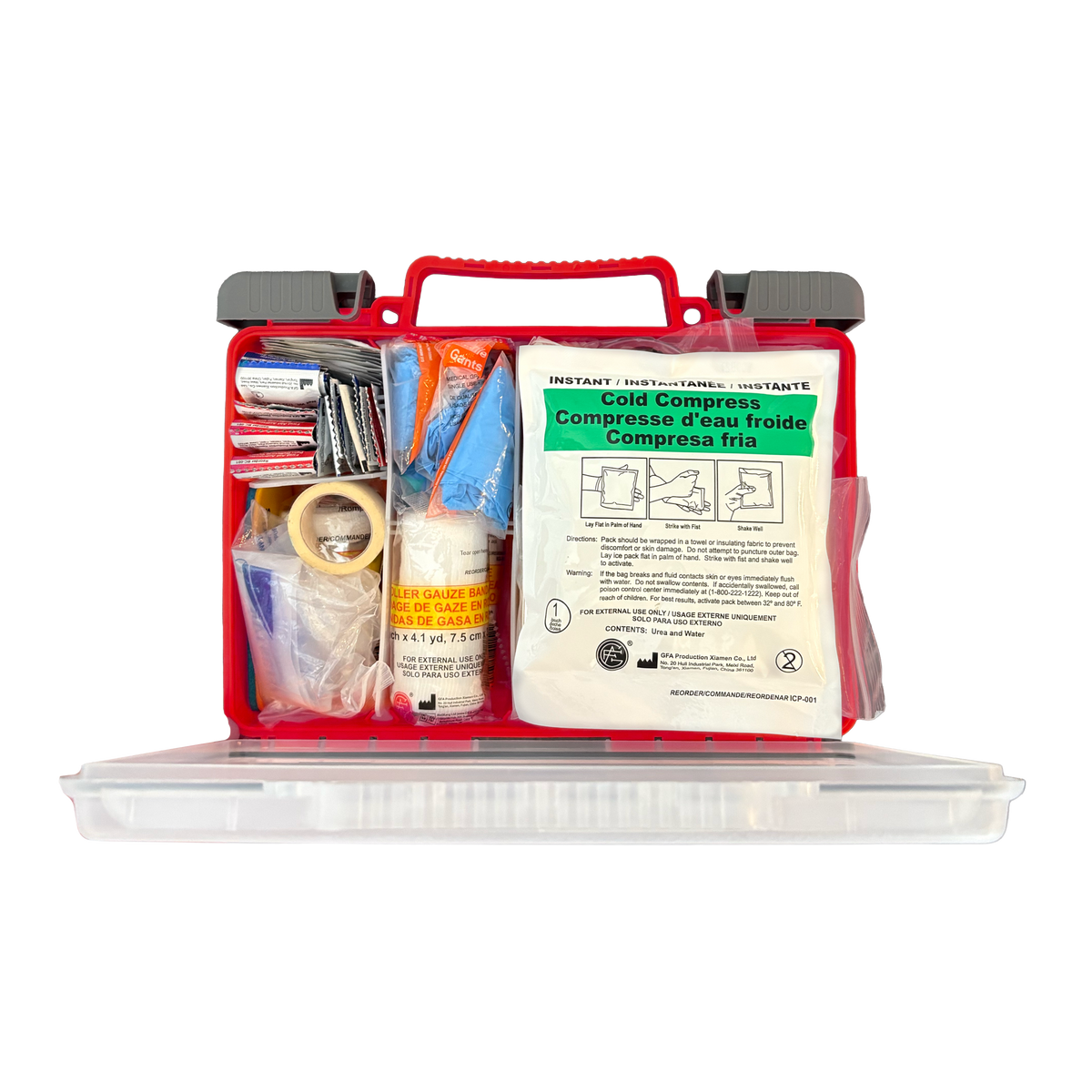
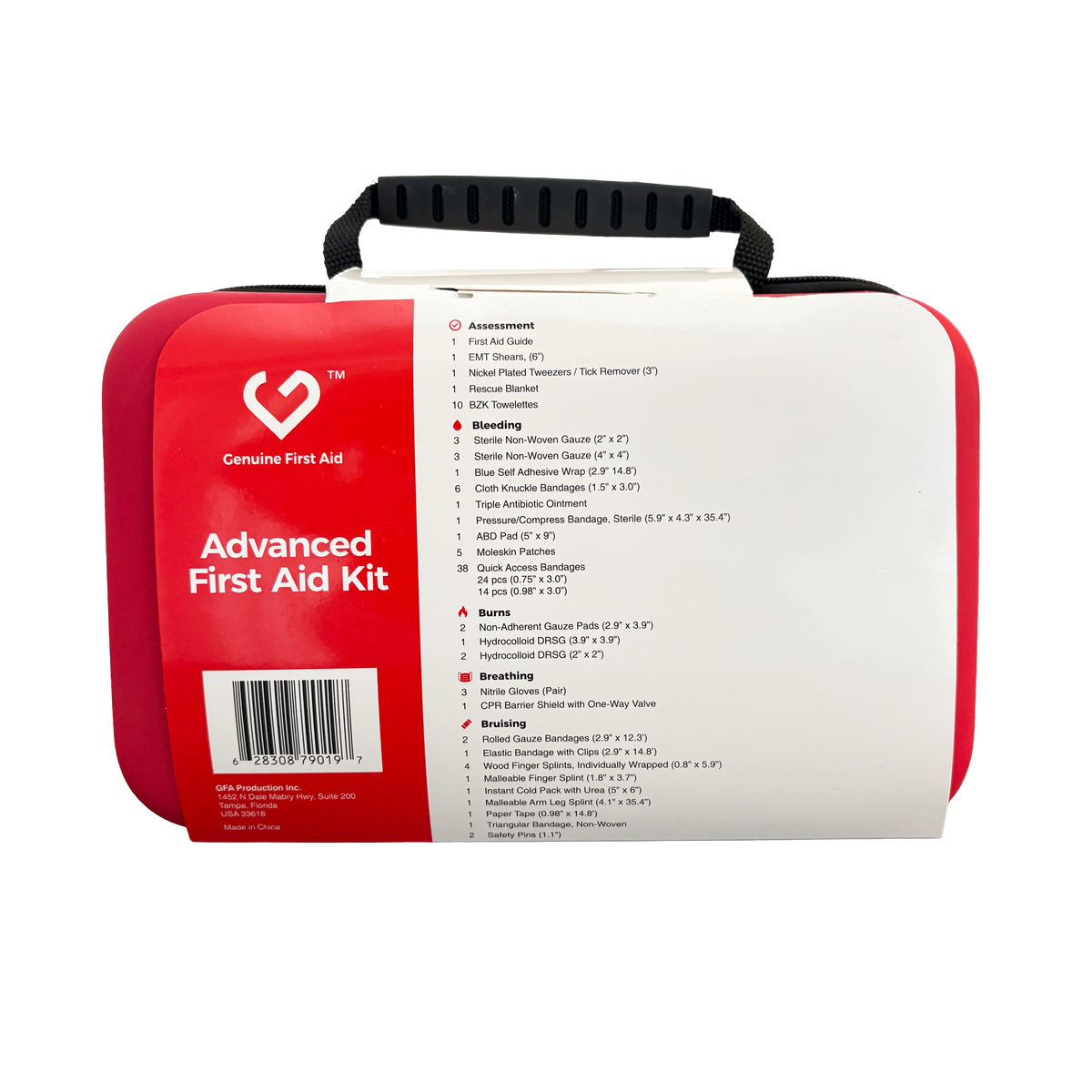
Genuine First Aid workplace kits meet the ANSI/ISEA Z308.1 Class A supply requirements and are organized by injury type – Assessment, Bleeding, Burns, Breathing, Bruising – so a co-worker finds the right item in seconds. The OSHA Class A Workplace First Aid Kit (Type I–A, wall-mountable) suits offices, retail, shops and light industry with teams of 10 or more. The Contractor Series First Aid Kit (Type II–A, portable) adds eye wash, eye pads, burn dressing and ten antibiotic ointments for crews of up to 50 on jobsites. Larger facilities complete their program with an AED and an alarmed cabinet.
Buying for several sites or reselling to your customers? Our wholesale program offers case pricing, payment terms after the first order and free freight on orders over $300.
Compare
OSHA Class A or Contractor Series?
Both meet the ANSI/ISEA Z308.1 Class A supply requirements. The difference is the container, the headcount and the jobsite extras.
ANSI/ISEA Z308.1 Class A
ANSI/ISEA Z308.1 Type II–A
Type I–A, wall-mountable plastic box
Type II–A, portable latched box
10+
Up to 50
75+
70+
–
Eye wash 1 fl oz, 2 eye pads, 2 eye covers
10 burn cream packets, 2 non-adherent pads
10 burn ointments, burn dressing, 2 non-adherent pads
–
10
1.5 lb
1.9 lb
Offices, retail, shops, light industry
Construction, trades, warehouses, fleets
Good to know
Workplace first aid kits – compliance questions
What first aid kit does OSHA require?
OSHA 29 CFR 1910.151(b) requires that adequate first aid supplies be readily available, without listing contents. OSHA’s Appendix A points to ANSI/ISEA Z308.1 as the reference list. In practice, a kit that meets ANSI/ISEA Z308.1 Class A is what inspectors, insurers and safety consultants expect in low-risk workplaces; higher-risk sites move to Class B or add supplies after a hazard assessment.
Class A or Class B?
Class A covers the most common workplace injuries: minor cuts, abrasions, minor burns, sprains, eye irritation. Class B holds larger quantities and extra items (splint, tourniquet, more eyewash and burn care) for workplaces with higher risk or more people. Our current range is Class A; contact us for Class B programs.
How many first aid kits do I need for my employees?
There is no federal ratio. Supplies must be reachable quickly by every worker, so count work areas and floors rather than heads: one kit per area where people work, within a few minutes’ walk, and more where hazards are higher. Construction sites must check kits weekly.
Do I also need an eyewash station?
Where eyes or body may be exposed to injurious corrosive materials, 29 CFR 1910.151(c) requires suitable facilities for quick drenching or flushing. A bottle of eye wash in a kit (included in the Contractor Series) handles minor irritants but is not an emergency eyewash station.
Is an AED required?
Federal OSHA recommends AEDs but does not require them in general industry. Several states require AEDs in specific settings (schools, health clubs, large public buildings). See our AED collection for devices, batteries, pads and cabinets.