
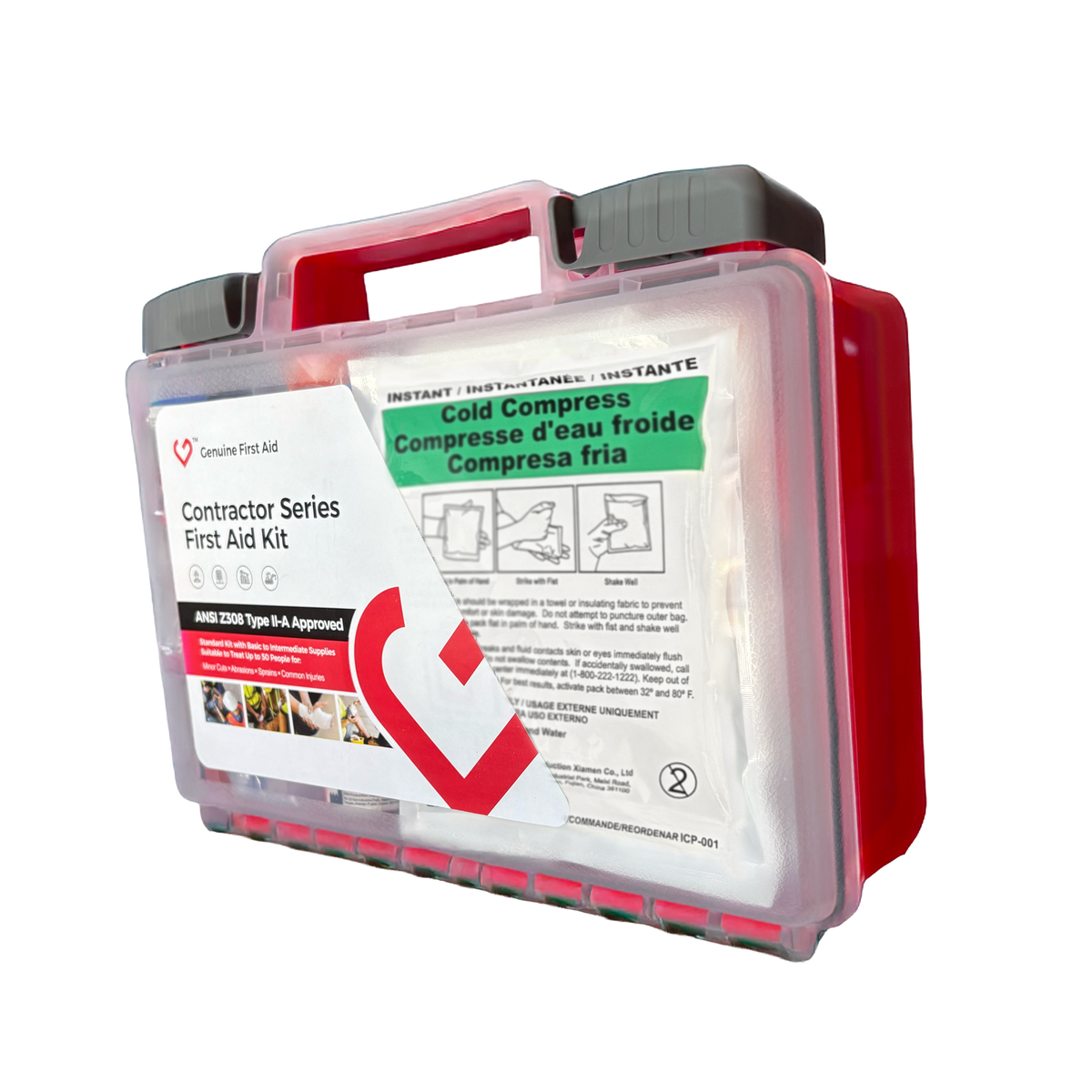
Contractor Series First Aid Kit
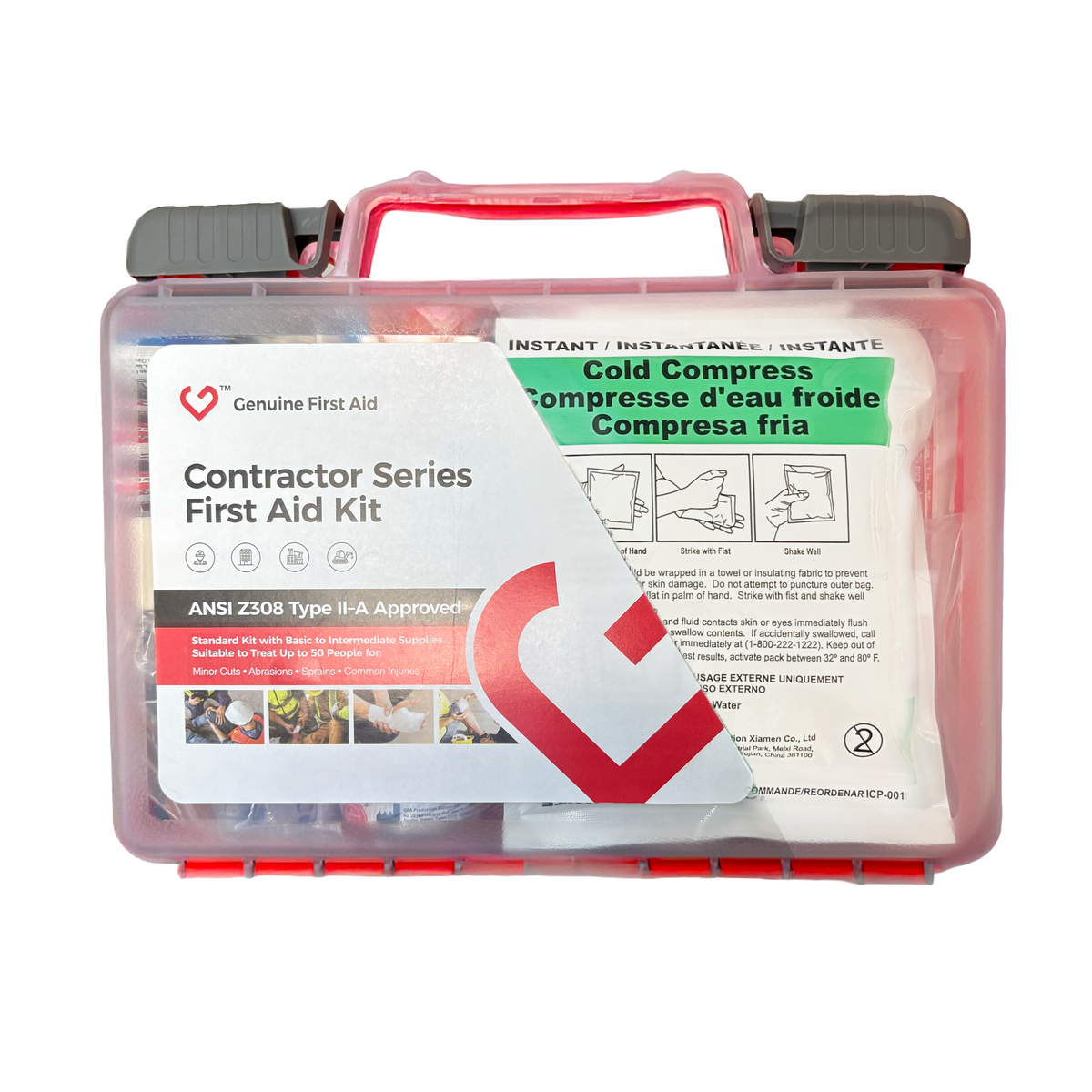
The Contractor Series First Aid Kit is an ANSI-approved solution designed to support worksites, treating up to 50 people for common jobsite injuries like cuts, sprains, and burns.
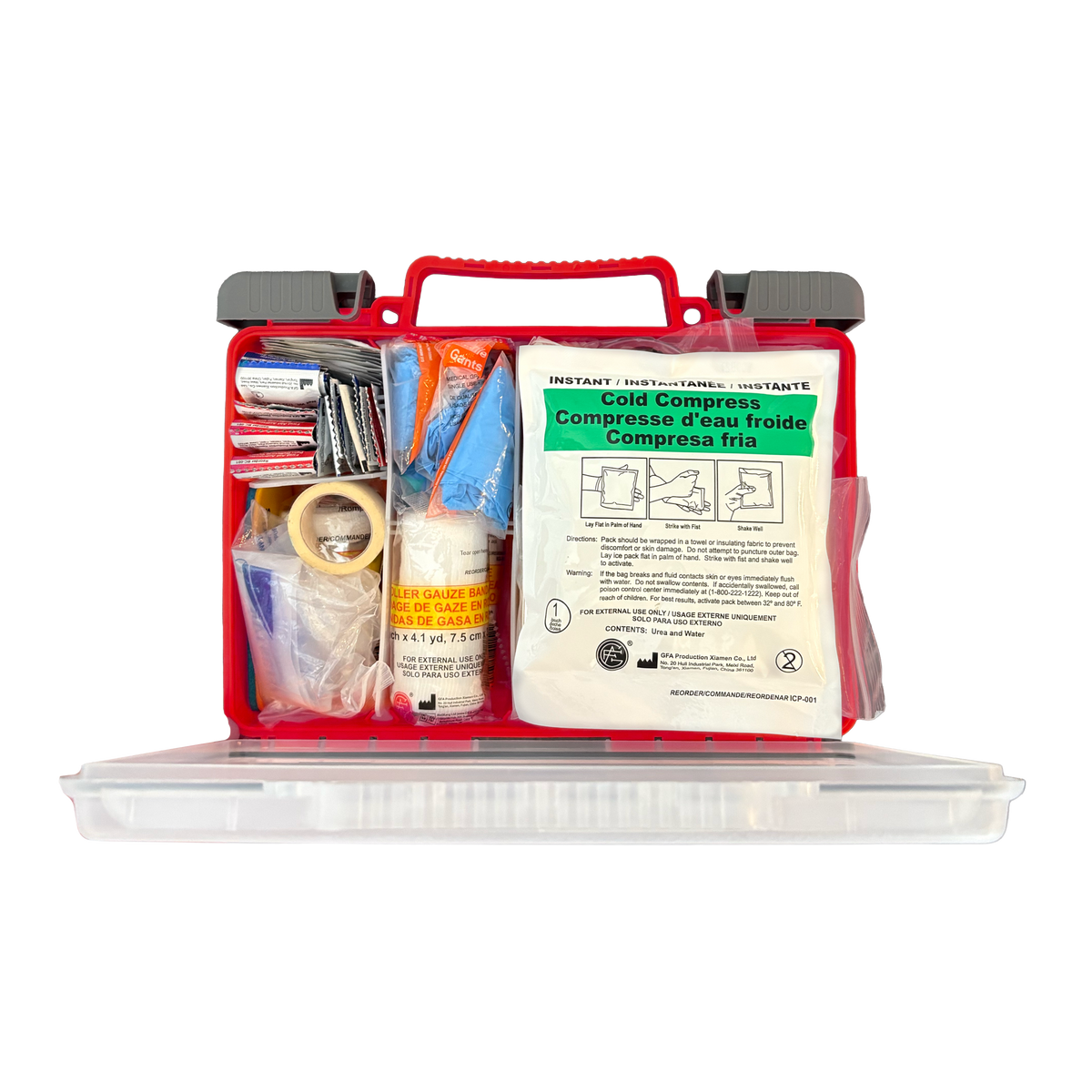
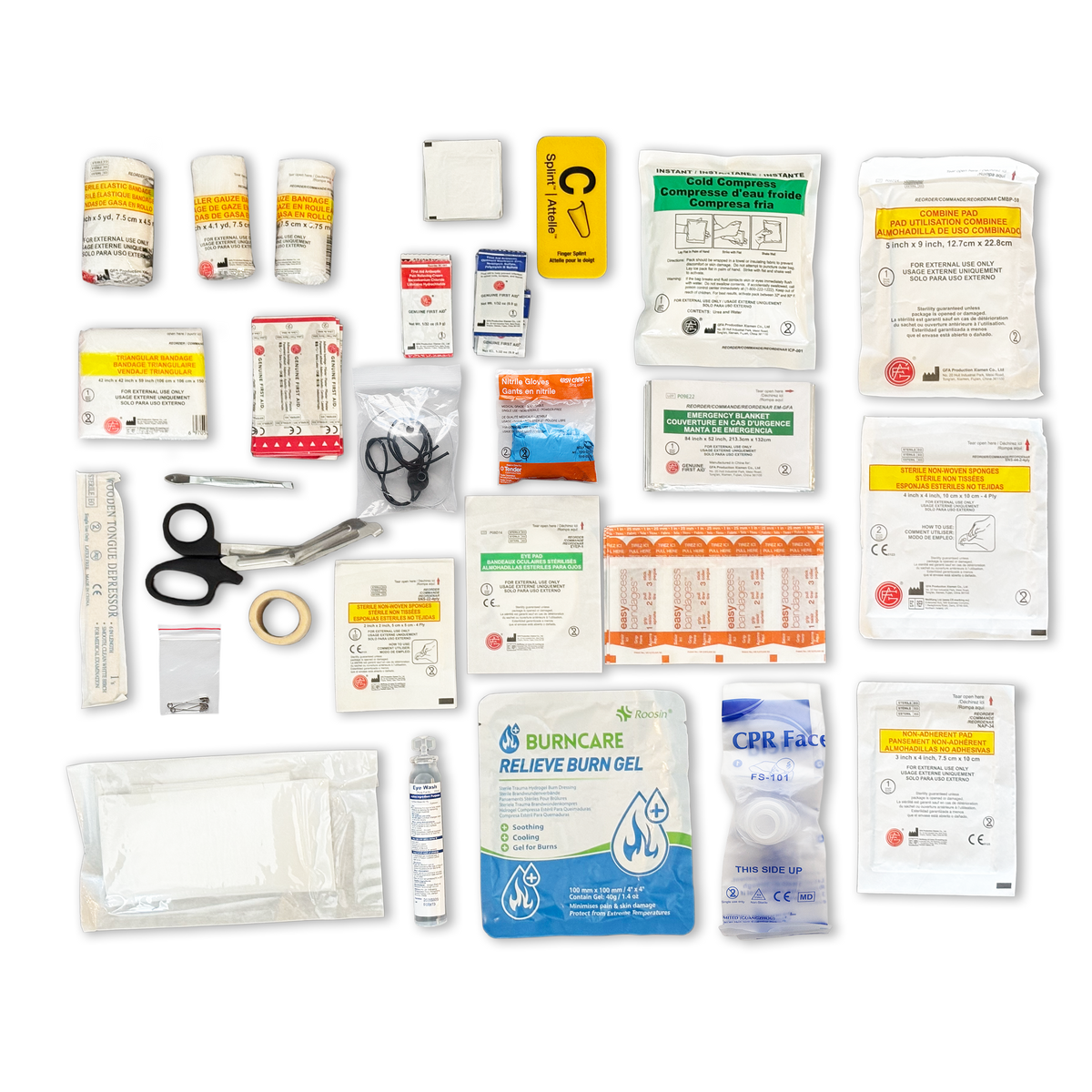
This kit brings peace of mind to worksites of all sizes. From gauze and gloves to burn treatments, eyewash and cold packs, it’s stocked with practical tools contractors actually use. Designed to support up to 50 people, it keeps your team safe, prepared and ready to get back to work.
- ANSI/ISEA Z308.1 Type II–A – exceeds workplace first aid supply requirements for Class A.
- Supports up to 50 people – comprehensive coverage for crews.
- 70+ essential supplies – focused on common jobsite injuries, including eye wash solution, eye pads, burn dressing and 10 antibiotic ointments.
- Organized for quick use – supplies grouped by injury type in a latched plastic box (9.8” × 7.9” × 3.1”).
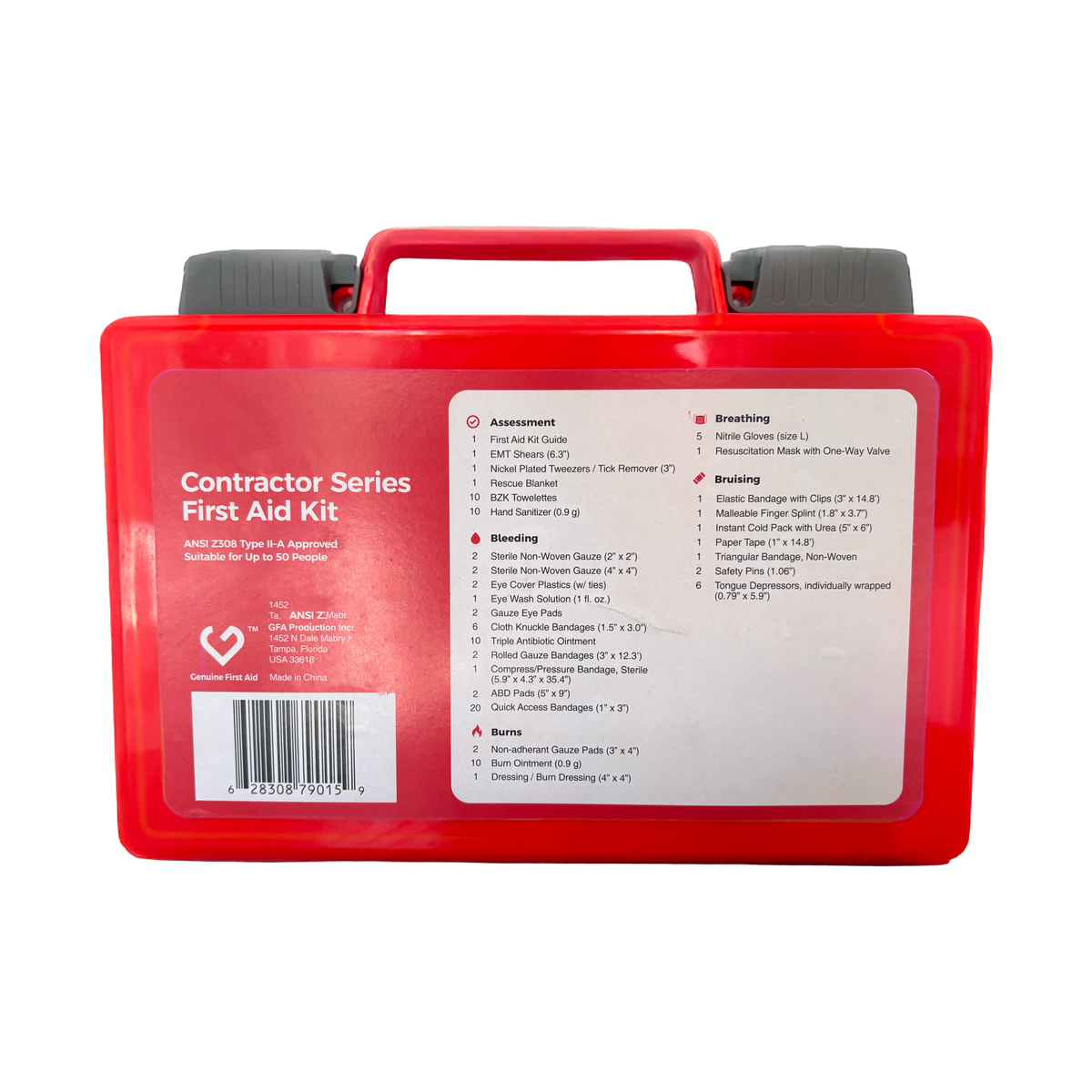
Assessment
- 1 First Aid Guide
- 1 EMT Shears (6.3”)
- 1 Nickel Plated Tweezers / Tick Remover (3”)
- 1 Rescue Blanket
- 10 BZK Towelettes
- 10 Hand Sanitizer (0.9 g)
Bleeding
- 2 Sterile Non-Woven Gauze (2” × 2”)
- 2 Sterile Non-Woven Gauze (4” × 4”)
- 2 Eye Cover Plastics (with ties)
- 1 Eye Wash Solution (1 fl. oz.)
- 2 Gauze Eye Pads
- 6 Cloth Knuckle Bandages (1.5” × 3.0”)
- 10 Triple Antibiotic Ointment
- 2 Rolled Gauze Bandages (3” × 12.3’)
- 1 Compress / Pressure Bandage, Sterile (5.9” × 4.3” × 35.4”)
- 2 ABD Pads (5” × 9”)
- 20 Easy Access Bandages™ (1” × 3”)
Burns
- 2 Non-Adherent Gauze Pads (3” × 4”)
- 10 Burn Ointment (0.9 g)
- 1 Burn Dressing (4” × 4”)
Breathing
- 5 Nitrile Gloves (Size L)
- 1 Resuscitation Mask with One-Way Valve
Bruising
- 1 Elastic Bandage with Clips (3” × 14.8’)
- 1 Malleable Finger Splint (1.8” × 3.7”)
- 1 Instant Cold Pack with Urea (5” × 6”)
- 1 Paper Tape (1” × 14.8’)
- 1 Triangular Bandage, Non-Woven
- 2 Safety Pins (1.06”)
- 6 Tongue Depressors, individually wrapped (0.79” × 5.9”)
Standard: Meets ANSI/ISEA Z308.1 Type II–A requirements (Class A supplies in a Type II portable indoor container).
Regulations: Designed to help employers meet OSHA first aid requirements under 29 CFR 1910.151(b) (general industry) and 29 CFR 1926.50 (construction). OSHA does not approve, certify or endorse first aid products. Employers remain responsible for assessing the hazards of their worksite and adding supplies, training and, where required, an eyewash station.
FDA status. Manufactured in an FDA-registered facility. First aid kits are generally FDA-listed Class I or Class II devices; they are not “FDA approved” and we never describe them that way. Shipped from our U.S. warehouse.
OTC drug labeling. Drug-containing components (such as burn cream, antibiotic ointment or antiseptic towelettes) are labeled in accordance with FDA over-the-counter Drug Facts requirements (21 CFR 201.66). Read all product labels before use.
First aid kits are intended for the treatment of minor injuries only. They are not a substitute for professional medical care or emergency services. In an emergency, call 911. Poison Control: 1-800-222-1222. Inspect contents regularly and replace used or expired items. Keep out of reach of children; contains small parts.
Jobsite ready, organized by injury type
Class A supplies for crews of up to 50, with eye wash and burn care.
First aid guide, EMT shears, tweezers, rescue blanket, 10 BZK towelettes, 10 hand sanitizer
20 Easy Access Bandages™, sterile gauze, eye wash + eye pads + eye covers, 10 antibiotic ointments, rolled gauze, pressure bandage, 2 ABD pads
2 non-adherent pads, 10 burn ointments, burn dressing 4” × 4”
5 nitrile gloves, resuscitation mask with one-way valve
Elastic bandage, malleable finger splint, cold pack, paper tape, triangular bandage, safety pins, tongue depressors
50
People supported
Crews on jobsites and in industry.
70+
Essential supplies
Eye wash, burn care, bleeding control.
5
First aid categories
Assessment, Bleeding, Burns, Breathing, Bruising.
Technical & logistics data
Specifications for buyers, resellers and safety managers
GFA-CONT01US
628308790159
ANSI/ISEA Z308.1 Type II–A
1.9 lb (0.88 kg)
Plastic box 9.8” × 7.9” × 3.1”
6 units per carton
29 CFR 1910.151(b) – 29 CFR 1926.50
Compare the range
OSHA Class A or Contractor Series?
Both meet the ANSI/ISEA Z308.1 Class A supply requirements. The difference is the container, the headcount and the jobsite extras.
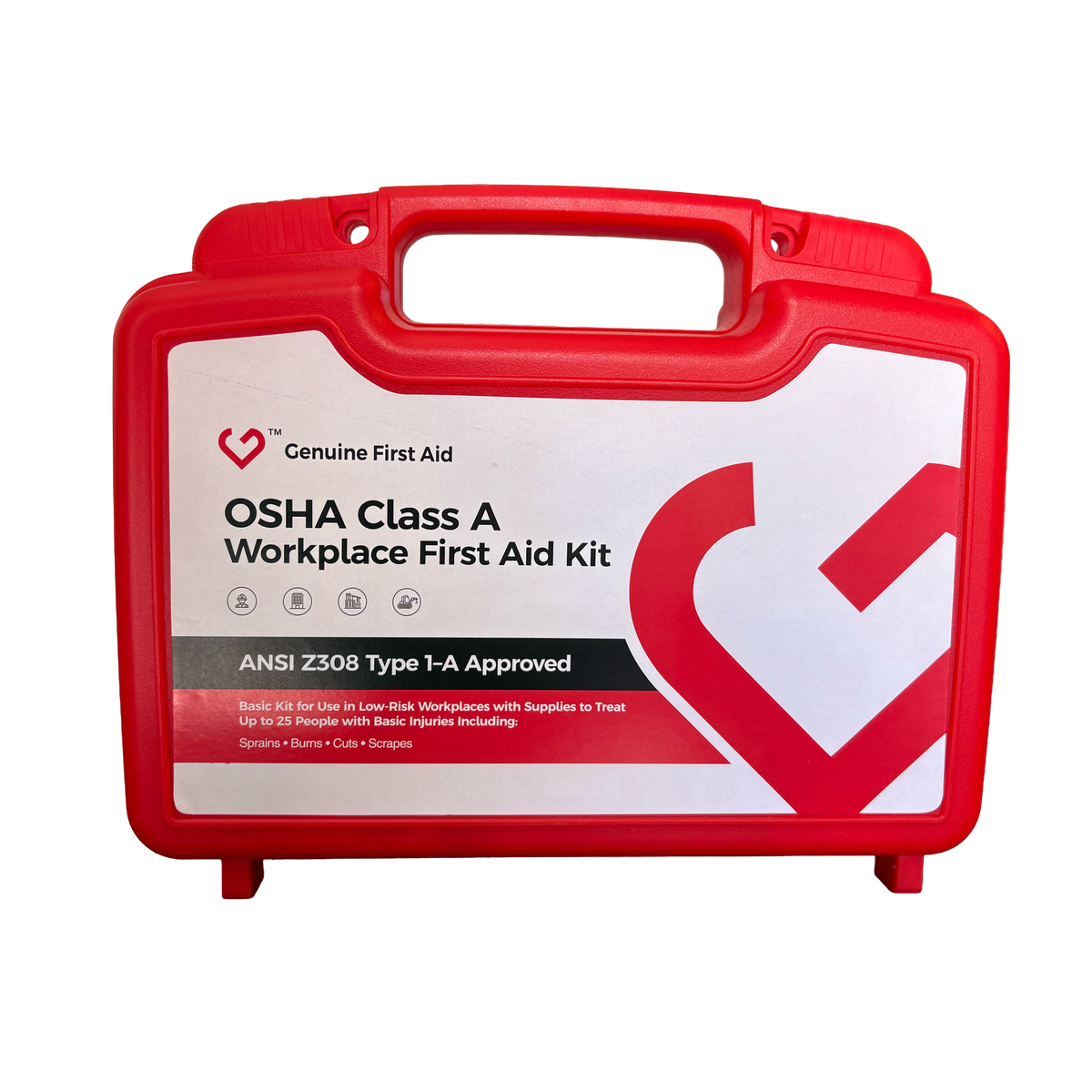
ANSI/ISEA Z308.1 Class A
ANSI/ISEA Z308.1 Type II–A
Type I–A, wall-mountable plastic box
Type II–A, portable latched box
10+
Up to 50
75+
70+
–
Eye wash 1 fl oz, 2 eye pads, 2 eye covers
10 burn cream packets, 2 non-adherent pads
10 burn ointments, burn dressing, 2 non-adherent pads
–
10
1.5 lb
1.9 lb
Offices, retail, shops, light industry
Construction, trades, warehouses, fleets
Good to know
Contractor Series First Aid Kit – compliance questions
Is this kit OSHA approved?
No first aid kit is “OSHA approved”: OSHA does not approve, certify or endorse products. OSHA 29 CFR 1910.151(b) and 1926.50 require employers to make adequate first aid supplies readily available, and OSHA’s non-mandatory Appendix A points to ANSI/ISEA Z308.1 as the reference for kit contents. This kit meets the ANSI/ISEA Z308.1 Class A supply list in a Type II container.
What is the difference between Type I–A and Type II–A?
The letter is the supply class (Class A covers the most common workplace injuries; Class B is a larger fill for higher-risk environments). The number is the container type: Type I is for indoor, mountable use; Type II is portable for indoor use; Types III and IV are for mobile and outdoor/rough use. The Contractor Series is a portable Type II case with Class A supplies.
How many kits does a jobsite need?
Federal OSHA sets no ratio. Supplies must be “readily available” and adequate for the number of workers and the hazards. In practice one kit per 50 workers per work area is a common starting point; multi-level or spread-out sites need a kit on each level or zone. Construction sites must check supplies weekly (29 CFR 1926.50(d)(2)).
Does it include an eyewash station?
It includes a 1 fl. oz. eye wash solution for flushing minor irritants. It is not an emergency eyewash station: where corrosive materials are used, 29 CFR 1910.151(c) requires suitable facilities for quick drenching or flushing of the eyes and body.
How often should the kit be inspected?
Weekly on construction sites; at least monthly in general industry is a widely used practice. Replace used items immediately and watch the expiration dates printed on ointments, eye wash and the cold pack.