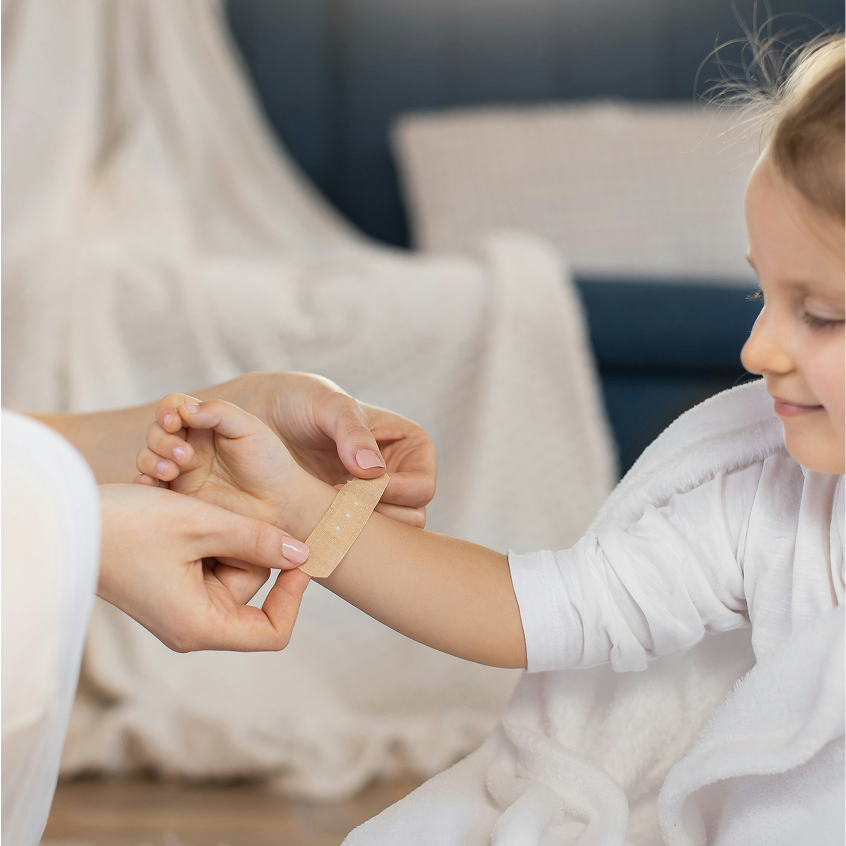
Kids get hurt. Babies can’t explain what’s wrong. This section gives parents and caregivers clear, calm steps for the emergencies they worry about most.
Top Child Emergency Risks
- Choking
- Breathing trouble / asthma
- Severe allergic reactions
- Burns
- Head injuries
- Fevers & febrile seizures
These look scary, but knowing simple first steps makes a huge difference.
Choking (Infant vs Child)
Infants (under 1):
- 5 back blows → 5 chest thrusts → repeat
- Support head and neck at all times
Children (1+):
- 5 back blows → 5 abdominal thrusts → repeat
If the child becomes unresponsive:
- Start CPR and have someone call 911
CPR (Kid-Safe Basics)
- Infants: 2 fingers, small compressions, gentle breaths
- Children: 1 or 2 hands, stronger compressions, normal breaths
- Rate: Push hard, push fast — around 100–120 per minute
Rule to remember:
If a child is not breathing, gasping, or unresponsive → start CPR and call 911
Burns on Kids
- Cool with water 10–20 minutes
- Cover with non-stick dressing
- No creams, butter, oils, or toothpaste
Get medical help if:
- Burn is bigger than the child’s palm
- On face, hands, feet, or genitals
- Blistering or deep
Head Injuries
Watch for the warning signs:
- Vomiting
- Confusion
- Extreme sleepiness
- Unequal pupils
- Loss of consciousness
If any appear → 911 or ER immediately
For minor bumps: ice pack, monitor, and rest.
Allergies & Anaphylaxis
- Use EpiPen immediately
- Call 911
- If symptoms return and EMS hasn’t arrived, a second dose may be needed
Signs include swelling, wheezing, hives, or trouble breathing.
Fevers & Febrile Seizures
- Protect the child from hitting objects
- Don’t restrain them
- Place on their side until seizure stops
- 911 if it’s their first seizure or lasts more than 3–5 minutes
Baby-Safe Reminders
- No honey under 1 year old (botulism risk)
- No small toys, popcorn, nuts, grapes (unless cut properly)
- Always test bath water (babies burn faster)
Parent Confidence Boost
Teach older kids:
- How to call 911
- Their address and last name
- Staying near an injured sibling while getting help
Small lessons = big safety.
Signal Learning Inc. (2026). First Aid and Disaster Preparedness Content. Used with permission.



Leave a comment
This site is protected by hCaptcha and the hCaptcha Privacy Policy and Terms of Service apply.